By Gina Flores
Editor at NoFakeNews
Now that the Catalan people have officially made their decision, I wonder if the Spanish government will stop pretending there’s not a problem? Will Spain respect the democratic decision of the people?
By Gina Flores
Editor at NoFakeNews
Now that the Catalan people have officially made their decision, I wonder if the Spanish government will stop pretending there’s not a problem? Will Spain respect the democratic decision of the people?
By Dr. John L. Reizer
Editor at NoFakeNews.net

Does anybody really believe that the mass bombing of Syria by the United States, Russia and others has anything to do with the oppression of the Syrian people? Is there something else that is really in play here? Are we in fact watching the beginning of a third world war that has intentionally been planned well in advance?
For more details, watch the latest David Icke video-cast trailer below:
David Dill, University of North Carolina – Chapel Hill
There is a growing concern about the cost, quality and value of higher education.
Despite the increasing cost of an academic degree, recent studies show substantial percentages of students, even in the most selective US colleges and universities, have failed to demonstrate significant improvement in critical thinking, complex reasoning and writing skills over the four years of college.
While students score high grades – an A has become by far the most common grade and is awarded three times more frequently now than in the 1960s – surveys done over the last 30 years indicate that the amount of time college students report actually studying for their academic degrees has declined by almost 50%.
Other indicators too show a decline in student academic achievement. In 1995, the US led developed nations in the share of the population (ages 25-34) with a college degree; today we have fallen to 19 among 28 nations.
Consequently, Congress is now considering major reforms to academic accreditation, the primary means by which we assure the academic quality of our colleges and universities.
Why are there problems with US academic accreditation, and what policies are needed to improve and assure academic quality?
I have been studying academic quality assurance (QA) for the last decade. Comparative research on the quality assurance policies of other developed nations offers useful insights.
In the US, the process of accreditation was developed by colleges and universities over the last 100 years to evaluate, assure and improve academic quality.
Today, each accrediting agency is a private membership association which, based upon an external peer review of an institution or academic program, recommends the award of accredited status to colleges and universities. The US has six regional agencies accrediting nonprofit public and private as well as for-profit institutions.
Accreditation is now crucial for the economic survival of colleges and universities. Beginning with the Korean War GI Bill in 1952, student grants and loans provided by the federal government could be used only at accredited institutions.
Therefore, accreditation in the US now serves the dual function of academic quality assurance and eligibility to receive federal funds.
However, US accreditation for bachelor’s degrees appears less successful than the quality assurance (QA) agencies of other developed countries such as Finland, the Netherlands and Norway. Why is that?
A significant difference lies in the structure of our baccalaureate education.
In most other countries, baccalaureate programs are focused on a particular field. The courses of instruction students take are largely mandated by each university, and academic programs often culminate in a comprehensive exam or project that influences students’ graduation.

 A more cohesive degree structure in other countries motivates students to take their learning seriously.

smannion, CC BY-NC
Foreign academic programs, even in the arts and sciences, are more comparable to US undergraduate professional programs such as engineering and architecture.
The more cohesive degree structure in other countries motivates students to take their learning seriously and to invest greater time and effort in their studies.
These structured degrees also provide valuable information – both to the student and to the student’s program faculty – of what each student has actually learned.
In contrast, the majority of US baccalaureate students are enrolled in degree programs in which over three-quarters of their academic work is part of a general education component, and students personally select most of the courses they complete.
Because of the influence of a student’s grade point average on his or her future success, many, even at select colleges and universities, choose individual courses and academic majors characterized by greater grade inflation.
A study of Duke University undergraduate students estimated they elected 50% fewer courses in the educationally rigorous fields of the natural sciences and mathematics because grading practices across disciplines are not equitable.
Our undergraduate programs are distinctive in their large number of elective courses, the variation in grading standards across subject fields and the degree of student choice. There is also a lack of comprehensive measures of what students actually learn from their general education as well as from many majors.
Consequently, the faculty’s reliance on academic credits and grades as the principal means of assuring academic standards is ineffective.
So, how can public policy best address this problem?
As Nobel Laureate Elinor Ostrom argued, neither markets nor the rules of the state are the most effective means “to govern, provide, and manage public goods” that are complex and difficult to measure, like academic knowledge.
This is particularly the case in professional, self-governing organizations like US colleges and universities.
I believe three actions are essential.
First, as the education ministers of the European Union (EU) stipulated in a collective policy governing QA agencies in their respective countries: effective quality assurance requires a national regulatory agency with appropriate expertise, which is truly independent from governments, higher education institutions and organs of political influence.
As of now, in the US, the private accrediting agencies are owned, operated and financially supported by fees paid by the institutions they evaluate.
At the federal level, the National Advisory Committee on Institutional Quality and Integrity (NACIQI) has the power to define accrediting criteria as well as approve accreditation agencies whose awards provide eligibility for federal funds.
The NACIQI reports to the Department of Education and is composed of 18 members, six appointed by the secretary of education and 12 appointments divided evenly between the majority and minority leaders of the House and Senate.
In short, the existing system for assuring academic quality in the US is neither independent nor autonomous.

 How can the system be reformed?

Francisco Osorio, CC BY
One means of creating a truly independent and competent national quality assurance agency would be to assign the responsibilities of NACIQI to an agency governed by and reporting to the National Academies of Science.
The National Academies are private, nonprofit societies of distinguished scholars dedicated to the furtherance of science and technology and to their use for the general welfare. Based upon a congressional charter granted in 1863, the National Academies have a mandate to advise the federal government on matters of science and education.
The criteria for US academic accreditation need to be more sharply focused on institutional processes that ensure quality in teaching and student learning.
These include the institution’s processes for:
Instead, the accreditation criteria mandated by NACIQI now include institutional measures not directly related to student academic performance. These include facilities, fiscal and administrative capacity, as well as student recruiting and admissions practices.
The question for accreditors is not whether an institution has a process for evaluating academic programs, but whether evaluations are objectively assessing program quality and resulting in demonstrable improvement in teaching and student learning within identified programs.
The academic audit review at Hong Kong’s universities, adapted by the public university systems in Missouri and Tennessee, provides a valuable model for this approach.
Third, the policy approved by the educational ministers in the EU countries also required that all national QA agencies in participating countries undergo an independent external evaluation, which is made public.
Our higher education would be served best if a new federal QA agency were similarly required to be publicly evaluated by an established, respected and truly independent national organization such as the US Government Accountability Office.
This would also help provide assessments of the extent to which a regulatory agency helps assure academic standards.
Eventually, the most effective means of reforming US academic accreditation would be to reframe and redesign our national process for assuring academic quality.
We need to remember that academic accreditation should reinforce the incentives for collective action by faculty members within each college and university, for that is the surest means to effectively assess and continually improve teaching and student learning.

David Dill, Emeritus Professor of Public Policy, University of North Carolina – Chapel Hill
This article was originally published on The Conversation. Read the original article.
The statements below have not been evaluated by the Food & Drug Administration (FDA). Information regarding the use of kratom in folk medicine is provided for education purposes only, it is not intended as medical advice.
Introduction
This guide was created as an educational resource to provide accurate information about kratom. It is also intended to correct much of the misinformation circulating on the Internet and being perpetrated by the Media.
What is Kratom?
Kratom is a tree native to Southeast Asia (Thailand, Malaysia, Indonesia, Borneo, etc.). Its botanical name is Mitragyna speciosa. Kratom is in the same family as the coffee tree (Rubiaceae). The leaves of kratom have been used as an herbal drug from time immemorial by peoples of Southeast Asia. It is used in folk medicine as a stimulant (at low doses), sedative (at high doses), recreational drug, pain killer, medicine for diarrhea, and treatment for opiate addiction.
How is it taken?
In Thailand, kratom leaves are often chewed fresh (usually after removing the stringy central vein). Dried leaves can also be chewed, but since they are a bit tough most people prefer to crush them up or powder them so that they can be swallowed. Powdered kratom can be mixed with water and then drunk. This method is quick and easy. It can also be mixed with fruit juice or apple sauce. Dried kratom leaves are often made into a tea that is strained and then drunk. Tea is easier to drink than powdered kratom suspended in water. Kratom can be smoked, but doing so is impractical because the amount of leaf that constitutes a typical dose is too much to be smoked easily. A paste-like extract can be prepared by evaporating the water from kratom tea. This can be stored for later use. Small pellets of this extract can be swallowed, or it can be dissolved in hot water and consumed as a tea. Some people like to mix kratom tea with ordinary black tea, or other herbal teas, before it is consumed. This is done to make it more palatable. Sugar or honey can be added to sweeten it. Read more by clicking here!
By Gina Flores
Editor at NoFakeNews
The powers that be like to make everything taking place seem a lot more complicated than it actually is. I have embedded a short video below that explains in simple terms what is currently transpiring in the world today.
By Dr. John L. Reizer
Editor at NoFakeNews

Hollywood and the US Space Agency, NASA are in bed together. This should not really be that big of a surprise to our readers considering the fact that Hollywood is in bed with many government agencies. The entertainment industry is regularly used by the powers that be to help shape society’s misunderstanding of the world. This is especially true when one examines the funding of movie projects by the military industrial complex and the American Space Agency, a subset of the military industrial complex.
Movies that are constantly rolling off the production line showcase many themes concerning war and terrorism. While the plots remain pretty consistent, always portraying the American forces as being benevolent and on Humanitarian missions, the equipment used in these feature films is absolutely amazing. The movie projects could never be pulled off without tremendous financial support from the United States Government.
While movies are certainly impressive and entertaining for moviegoers, they are also very important to the United States Government’s interests in shaping the opinions and thoughts of its citizens as well as other people in various international markets. Whether or not we realize it, what we see on the big screen becomes part of our belief system. This is psychological warfare against the masses and the wars have been taking place for a very longtime.
The subjects of space travel and intelligent life outside the confines of planet earth are very controversial and protected sciences. The official sources of information that are allowed to comment on these subjects are closely guarded and controlled by independent governments around the world. For all intents and purposes, the most reliable source regarding space travel and intelligent life off world is believed by most people to be NASA.
According to NASA, the moon and Mars are devoid of life. This is the picture that has been painted by the powers that be and approved for distribution to the people of earth. This picture is not representative of what really exists on the moon or Mars. Mars is thriving with life. There is active civilization on the Red Planet and almost everything that the US Space Agency reports to its constituents regarding this planet is disinformation. The same thing holds true with regards to the moon. There are many building structures on the surface of the moon that have been photographed and verified by people that monitor NASA’s computer servers. The American people have been lied to by NASA for so long that they are just numb from the abuse.
This October, 2015, NASA/Hollywood will release its latest blockbuster cinematic production, “The Martian” and it will attempt to sell the lie that Mars is a dry and barren world. The film is being billed by many critics as amazing and breathtaking. NASA has contributed to the film by offering actual footage of the Martian terrain. This is obfuscation at its best and people will come away from this movie believing that Mars is a lifeless planet which it most certainly is not.
The announcement by NASA on September 28, 2015 that it has discovered water flowing on the surface of Mars is a clever marketing strategy by Hollywood and the space agency. NASA has known that an intelligent civilization existed on Mars for many years.
When all is said and done, people will continue to embrace a picture of Mars that has been disingenuously painted by NASA. It is a false picture that keeps humanity inside the box its rulers have created.
What do you think about this subject?
Editor at NoFakeNews.net

A NASA press release dated, 9/28/15 confirms what many whistle blowers and so called conspiracy theorists have been claiming for years concerning the planet Mars.
This is a huge admission on the part of the American Space Agency and one which destroys their previous theory that Mars was a dry and barren world with temperatures so cold that only frozen water could exist on the planet’s surface.
NASA and their cronies have published mainstream scientific views concerning Mars that have portrayed the Red Planet as a lifeless world. Their abilities to keep this portrayal in play was much easier to pull off when people believed the fourth rock from the sun was devoid of liquid surface water. People can grasp the concept that where there is water, there is going to be life and where water is absent, there is not going to be life.
In my opinion, Mars has surface water, an atmosphere, and intelligent life thrives on the planet. Based on the pictures I have viewed, originating from NASA catalogs, I believe there is an active civilization on present day Mars.
Why are we not being told the truth about life on Mars? The answer to that question is an entirely different can of worms that the powers that be don’t want opened now or in the immediate future.
Why let the cat out of the bag right now with regards to the liquid water admission? The answer, simply written, is because too many whistle blowers have honed in on pictures that are on NASA computer servers that show liquid water on the Martian surface. Every publicly funded unmanned mission to Mars has a dedicated, public domain website that contains catalogs of photographs of the Martian surface. While many of these photos are obviously obfuscated to erase the evidence showing signs of life, some seem to get through the cracks.

This picture very clearly shows liquid water present on the Martian surface. There are many pictures that have been taken by NASA spacecrafts that demonstrate water and civilization life on our nearest planetary neighbor. For additional information about this subject please visit the websites: marsanomalyresearch.com and marsstructures.com.
What do you think about this subject?
By Gina Flores
Editor at NoFakeNews.net
The world’s ruling elite (the powers that be that are really pulling the strings behind the scenes) have the head of the Catholic Church, Pope Francis parroting all of their biggest desires for the rest of humanity. On his big trip to the United States he aggressively pushed Agenda 21, Global Warming lies, and other important concepts that the controlling oligarchs want stressed to the masses at this particular point in time.
Make no mistake about it; the New Word Order is what the controlling elitists want and they have chosen Pope Francis as their newest messenger.
Read more below:
Editor at NoFakeNews
Most of us have probably read science fiction novels or watched movies in the same genre that flirted with time travel as a central theme. It’s a fascinating concept and one which many quantum physicists claim is possible, theoretically speaking, in real life.
I have written previously on this website that everything in our world is comprised of tiny subatomic particles that are essentially hollow. What exactly does that mean in English? Simply explained, it means that everything on a subatomic level fluctuates between being a solid particle and a frequency. When subatomic particles are in a solid state, they pass through unoccupied space. The process of a solid subatomic particle passing through unoccupied space requires the passage of time. When a subatomic particle transforms into its other personality (a frequency signature) it ceases to exist as a solid particle. Because subatomic frequencies lack solidness, they cannot pass through unoccupied space and therefore time ceases to exist.
Because physical matter can and cannot exist in the universe simultaneously, theoretically speaking, it would also be logical to assume that the same could be written about the properties of time. Writing from the perspective of a quantum physicist, it would therefore be possible to manipulate time and the quantum field. This is not science fiction, but rather a very scientifically explainable phenomena that occurs within the construct of our holographic universe.
In a nutshell, I am writing that time manipulation and time travel are not based on science fiction. They are based on real science and there are people living on this planet that have information about our world that was derived from the use of these technologies.
The research and science that attempts to manipulate the quantum field are being conducted in many locations throughout the world. The Hadron Collider in Geneva, Switzerland would be one of the places where this type of work is being conducted.
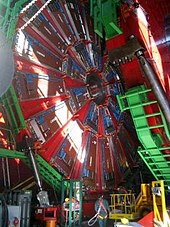
The Large Hadron Collider in Geneva, Switzerland
In 1985, Hollywood produced the blockbuster trilogy, “Back to the Future” starring Michael J Fox. These cinematic productions entertained moviegoers with a central plot that moved its characters back and forth through time. The movies also had another hidden agenda. The productions warned the people in our current time loop that something very serious was going to happen in their future.
Watch the video below to learn more:
 NoFakeNews