
One of our readers asked me to explain why we only see one side of the Earth’s Moon. The person asked why the Moon is stationary.
In answering the question to the best of my ability, I must rely on the information provided by NASA and officialdom which are sources we already know that repeatedly lie.
The Far Side of the Moon
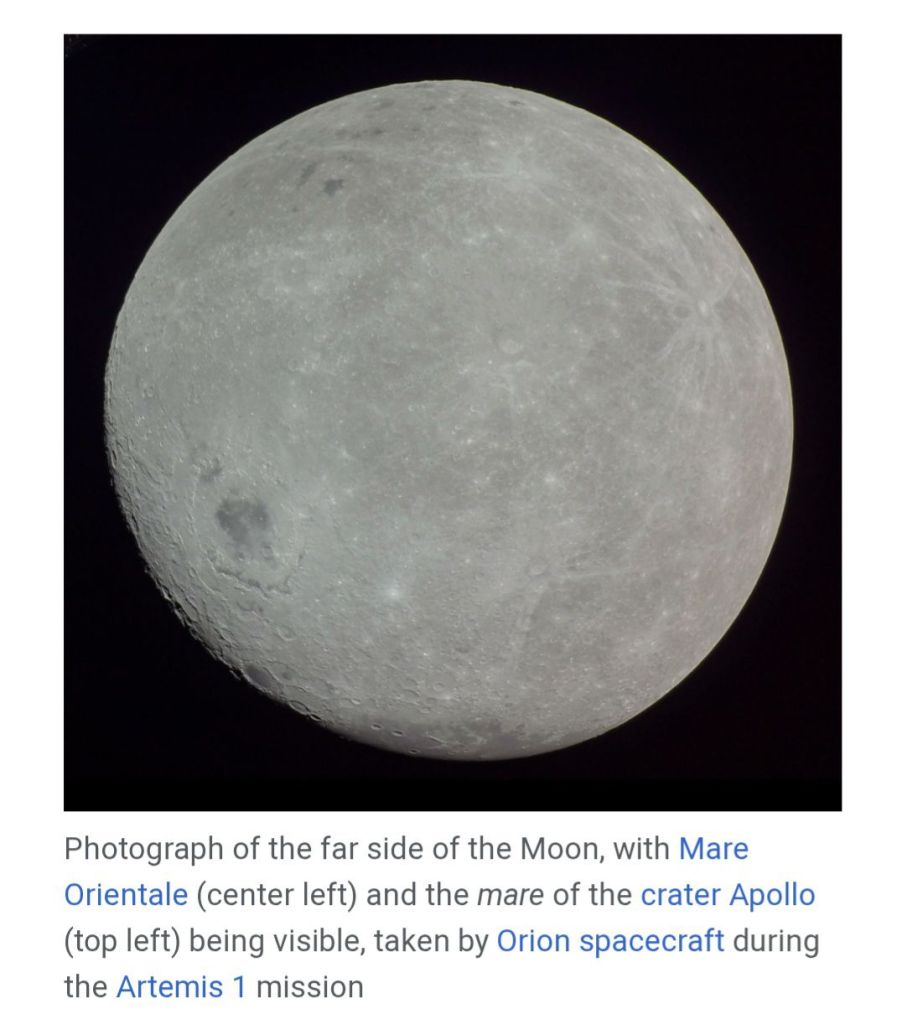
I think the reader was suggesting that maybe the Moon is flat and not a ball. Perhaps the reader believes that science’s explanation about why we only see one side of the Moon doesn’t make sense. Perhaps the person believes there is no other side to see — that it does not exist.
I am not sure what to think anymore because I don’t believe that the space program is legitimate.
Having written all of that, let me give you the mainstream explanation of why we only see one side of our Moon.
The Moon is not stationary. It orbits the Earth and spins on its axis, but it does so at a rate of spin and revolution that matches the Earth’s movements so that the same face of the Moon is always visible to the people of Earth.
This phenomenon is called Tidal Lock. According to Wikipedia, “Tidal locking between a pair of co-orbiting astronomical bodies occurs when one of the objects reaches a state where there is no longer any net change in its rotation rate over the course of a complete orbit. In the case where a tidally locked body possesses synchronous rotation, the object takes just as long to rotate around its own axis as it does to revolve around its partner. For example, the same side of the Moon always faces the Earth, although there is some variability because the Moon’s orbit is not perfectly circular. Usually, only the satellite is tidally locked to the larger body.[1] However, if both the difference in mass between the two bodies and the distance between them are relatively small, each may be tidally locked to the other; this is the case for Pluto and Charon. Alternative names for the tidal locking process are gravitational locking,[2] captured rotation, and spin–orbit locking.”
Tidal Locking of the Moon
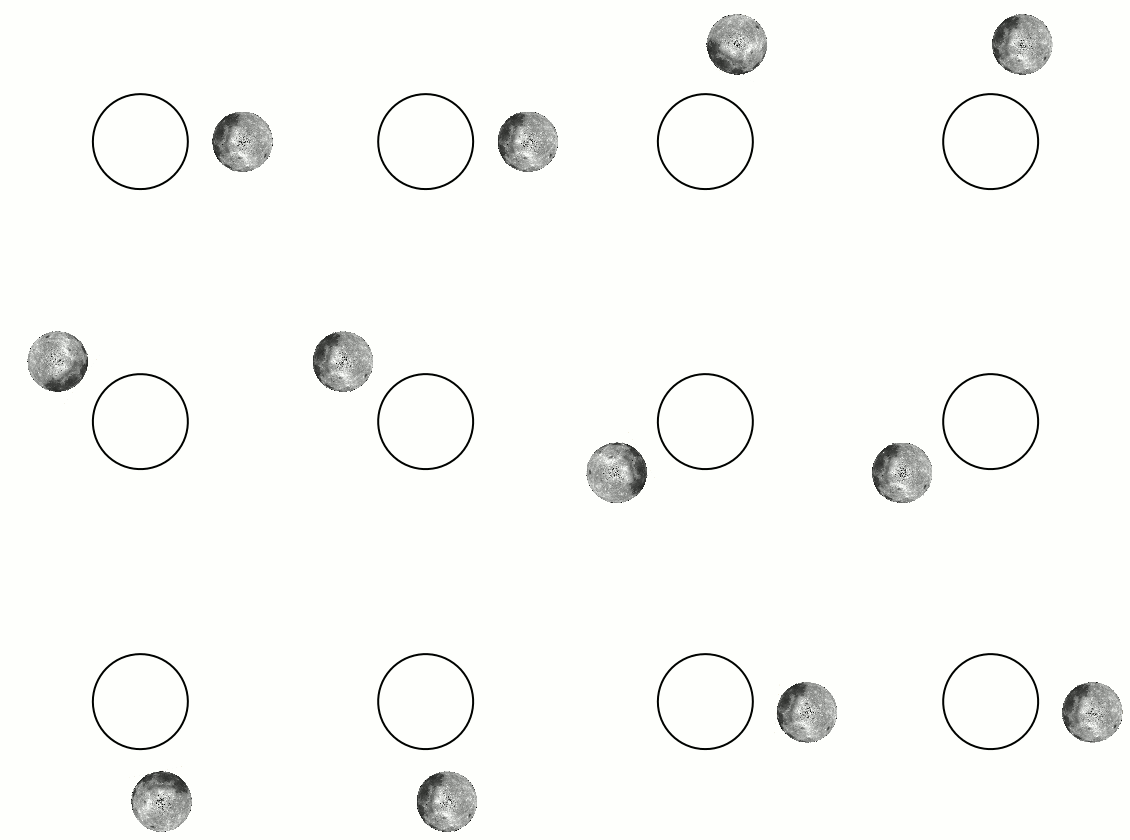
I hope this explanation makes sense, as it initially confused me. When I was writing my novella, False Memory, a few years ago, I spent an entire weekend studying the subject of tidal locking because I needed to incorporate the logic of accepted science into the story’s narrative.
I Have A Problem with the Narrative
Despite the absence of tidal locking while allegedly traveling in deep space, Apollo astronauts didn’t photograph the Moon’s far side for unknown reasons. Apparently, nobody else has either.
During the outward journey, the excuses for not producing a photo of the Moon’s far side were that the NASA cameras were not strong enough and the spacecraft was too far away and constantly rotating, presenting the Moon as a tiny, distant object. The photos of the far side were only taken from close, stable lunar orbit, not while in transit.
Interesting to note that nearly all claimed photos of the Moon’s far side that are not composite or computer-assisted productions have been from spacecraft traveling around the lunar satellite. This unusual policy, which involves not capturing photos of the far side of the Moon while spacecraft are in transit and outside the influence of tidal locking, applies to the recent Artemis 1 mission.
Wait a second…!
What about the famous photo known as The Blue Marble? That famous photo was taken by Apollo astronauts using NASA cameras during transit to the Moon, outside the influence of tidal locking. The photograph shown below looks relatively clear.
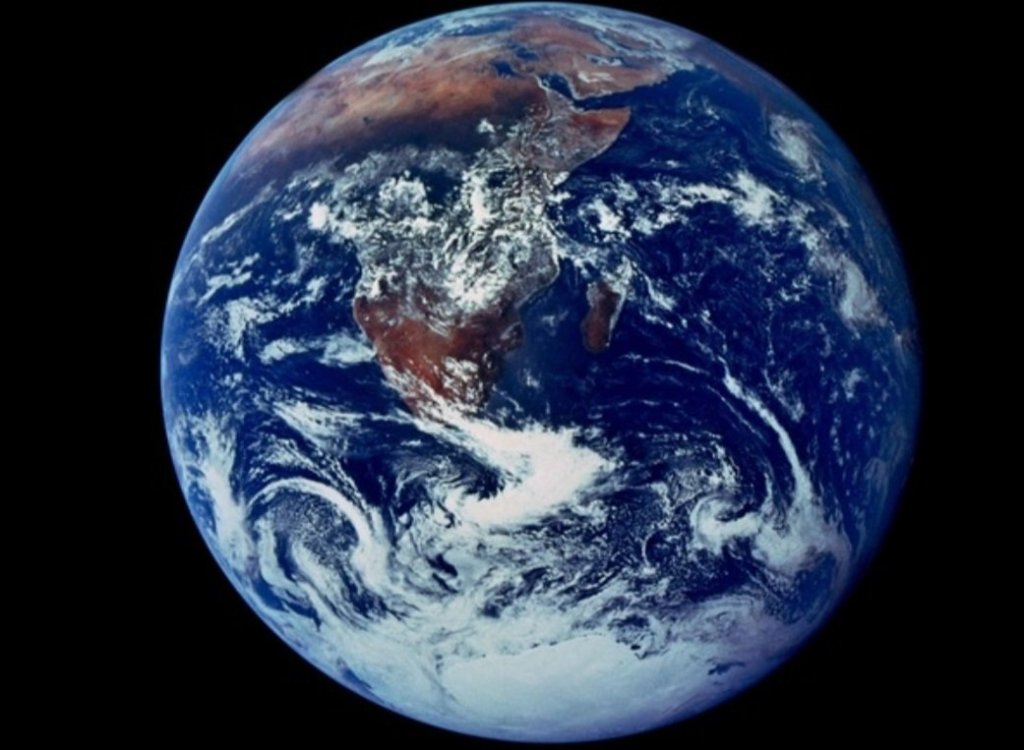
According to NASA, the person who took the famous Blue Marble photo is unknown. Are you kidding me?
Let’s review, there were three Apollo astronauts onboard Apollo 17, and nobody remembered who took the only full picture of Earth ever recorded.
None of the astronauts wanted to be credited with taking the most famous photograph ever because it was a CGI fake.
But here is the kicker that tells you NASA is full of, you know what! According to an article in The Atlantic Magazine, you cannot see the globe shape of Earth unless you are 20,000 miles away in outer space.
“It was the first photograph taken of the whole round Earth and the only one ever snapped by a human being. You can’t see the Earth as a globe unless you get at least twenty thousand miles away from it, and only 24 humans ever went that far into outer space.” — The Atlantic Magazine (2011)
Only 24 humans ever went far enough in space to see the globe shape of Earth, and they were all Masons! You can’t make up this science fiction!
It seems illogical and sketchy as hell to me that when crewed or uncrewed spacecraft have been traveling in outer space outside the influence of tidal locking, not one picture of the far side of the Moon was captured.
I am sure that with the CGI capabilities of today and a $70 million daily budget, NASA will soon produce some really cool movie studio productions of the Moon’s far side.
If you believe that Russia, America, or any other country or private company can fly an uncrewed or crewed spacecraft to the Moon or any other locations outside Earth’s atmosphere, you have much catching up to do on this website. You might want to begin reading here!
Target List – A Feature Film

Click on the Image to watch the movie

 NoFakeNews