
Prompts Created by John Reizer, Tresantarish language created by ChatGPT
Piggybacking on my previous article, here is the newest functional language (Tresantarish) created earlier today from my prompts and the AI platform ChatGPT.
Enjoy!
-Dr. John Reizer
You said:
Create a new alphabet and language using 18 more characters than the English alphabet. Make the new language have 8 vowels and 10 consonants. Make each character have a unique sound that is distinct to the new language. Write a paragraph using the new language, and create a translation tool to translate the language between English and the new language. Call the new language Tresantarish
ChatGPT said:
Creating a completely new language and alphabet is a fascinating challenge! Let’s break it down into steps: the alphabet, the grammar structure, and then the translation tool.
Step 1: Create the Alphabet
Let’s design a unique alphabet with 18 characters (more than the traditional English alphabet, but not too overwhelming). The alphabet will include 8 vowels and 10 consonants. Each character will represent a sound that is distinct to Tresantarish.
Tresantarish Alphabet:
- Vowels: a, e, i, o, u, y, ä, ö
- Consonants: b, c, d, f, g, h, j, k, l, m
Alphabet Pronunciation Guide:
- a = /ɑ/ (as in “father”)
- e = /ɛ/ (as in “bet”)
- i = /ɪ/ (as in “sit”)
- o = /ɔ/ (as in “bore”)
- u = /u/ (as in “flute”)
- y = /ɪ/ or /aɪ/ (like in “sky”)
- ä = /æ/ (like in “cat”)
- ö = /ø/ (like in “bird”)
- b = /b/
- c = /k/
- d = /d/
- f = /f/
- g = /g/
- h = /h/
- j = /ʒ/ (like in “measure”)
- k = /k/
- l = /l/
- m = /m/
Step 2: Grammar Structure
The language will follow a simple Subject-Object-Verb (SOV) order for sentence structure, which is typical of languages like Japanese or Korean.
Basic Sentence Structure:
- Subject + Object + Verb
- For example: “I apple eat.” would translate to “I eat apple” in English.
Verb Conjugation:
- Verbs will not conjugate based on tense or number. Instead, context will indicate tense.
- A simple particle (such as ta for past tense, ne for future tense) will be used to specify time.
Noun Cases:
- Tresantarish doesn’t use articles (like “the”) but uses a case marker to indicate subject, object, or possessive roles.
- -i for subject
- -a for object
- -u for possession
Step 3: Create the Language
Now, let’s write a short paragraph in Tresantarish and translate it to English.
Tresantarish Text:
- “Kali mäka liezi roka ta.”
- Translation: “The cat chased the mouse.”
Breaking it down:
- Kali = cat (subject)
- mäka = mouse (object)
- liezi = chased (verb)
- roka = article for object (similar to “the” in English, though not used in this language in the same way)
- ta = past tense particle (“ta” indicates past action)
Step 4: Translation Tool
Now, let’s build a very basic “translation tool” between English and Tresantarish:
1. English to Tresantarish
(For simplicity, here is a basic translation method for a few example phrases)
- I am eating an apple.
- Tresantarish: I äpi liezi.
- I = I (subject)
- äpi = apple (object)
- liezi = eating (verb)
- Tresantarish: I äpi liezi.
- She will visit the house.
- Tresantarish: She heza ne zuro.
- She = subject
- heza = house (object)
- ne = future tense particle
- zuro = visit (verb)
- Tresantarish: She heza ne zuro.
2. Tresantarish to English
- “Kali mäka liezi roka ta.”
- Translation: “The cat chased the mouse.”
Step 5: Optional Translation Tool (Functionality)
If we were to code the translation tool, it could map English words to Tresantarish based on a dictionary or predefined word mappings. The tool could look something like:
pythonCopy codedef translate_to_tresantarish(english_sentence):
    english_to_tresantarish = {
        'I': 'I',
        'am': '',  # No equivalent verb "to be" in Tresantarish
        'eating': 'liezi',
        'apple': 'äpi',
        'she': 'She',
        'will': 'ne',
        'visit': 'zuro',
        'house': 'heza',
        'the': '',  # No "the" in Tresantarish, context depends on case markers
        'chased': 'liezi',
        'cat': 'Kali',
        'mouse': 'mäka',
    }
    words = english_sentence.split()
    translated_sentence = []

    for word in words:
        translated_sentence.append(english_to_tresantarish.get(word.lower(), word))

    return ' '.join(translated_sentence)

# Test:
english_sentence = "I am eating an apple."
tresantarish_translation = translate_to_tresantarish(english_sentence)
print(tresantarish_translation)
This gives you a basic system to explore Tresantarish. Of course, in practice, the language would be far more complex with irregularities, syntax variations, idioms, etc., but this forms the basis! How do you like it so far?
You said:
Great! Let’s build the new language.
ChatGPT said:
Fantastic! Let’s build Tresantarish step by step. We already have the foundation laid with the alphabet, grammar structure, and some basic vocabulary. Now, let’s flesh out the language more deeply.
Step 1: Expanding the Alphabet and Phonetics
We’ve already designed the alphabet, but we could expand on it with more distinct sounds for richer expression. Let’s add a few more letters to cover some more nuanced sounds.
Additional Letters:
- v = /v/ (as in “vow”)
- z = /z/ (as in “zebra”)
- x = /ʃ/ (as in “shoe”)
- q = /kw/ (like in “quick”)
Now, the full Tresantarish Alphabet will be:
- Vowels: a, e, i, o, u, y, ä, ö
- Consonants: b, c, d, f, g, h, j, k, l, m, n, p, q, r, s, t, v, w, x, z
Step 2: Deepen Grammar and Syntax
Let’s go deeper into the grammar structure with some additional rules for sentence construction, verb tenses, and pluralization.
Sentence Construction:
- Word order: SOV (Subject-Object-Verb) still holds as the basic sentence structure.
- Modifiers (Adjectives/Adverbs): These generally come before the noun or verb they modify. Adjectives must agree in a kind of agreement with the noun (though this is not a strict rule and will have exceptions).
Tenses:
We will expand on the tense system a bit more:
- Present: No particle needed.
- Past: Add -ta (already established).
- Future: Add -ne (already established).
- Progressive (ongoing): Add -zi (similar to “is/are + verb-ing” in English).
- Perfect (completed): Add -ra (like “have done” in English).
Pluralization:
- For regular nouns, the plural will be formed by adding -n at the end (similar to how some languages use “-s”).
- Kali = cat → Kalin = cats
- Mäka = mouse → Mäkan = mice
Possession:
Possession is marked with the suffix -u (similar to the possessive “s” in English).
- Kaliu = cat’s
- Mäkau = mouse’s
Step 3: Expanding Vocabulary
We’ll expand the vocabulary to include some basic nouns, verbs, adjectives, and adverbs. We’ll make sure to keep the language simple and intuitive.
Common Nouns:
- Kali = cat
- Mäka = mouse
- Heza = house
- Liro = tree
- Pani = water
- Jura = sky
- Fela = friend
- Zuri = sun
Common Verbs:
- Liezi = to eat
- Zuro = to visit
- Jati = to run
- Miti = to sleep
- Hazi = to see
- Gazi = to go
- Suni = to speak
- Fari = to make/do
- Razi = to think
Adjectives:
- Lofi = big
- Miki = small
- Tari = beautiful
- Viri = fast
- Hadi = slow
- Nezi = hot
- Yumi = cold
- Fazi = new
Adverbs:
- Zera = here
- Sena = there
- Fira = very
- Zuri = now
- Ruma = always
Step 4: Create Example Sentences in Tresantarish
Let’s take a few simple English sentences and translate them into Tresantarish.
- “The cat is eating the apple.”
- Tresantarish:Kali äpi liezi zi.
- Kali = cat (subject)
- äpi = apple (object)
- liezi = eating (verb)
- zi = progressive (ongoing tense)
- Tresantarish:Kali äpi liezi zi.
- “I see the sun in the sky.”
- Tresantarish:I Hazi Zuri Jura.
- I = I (subject)
- Hazi = see (verb)
- Zuri = sun (object)
- Jura = sky (prepositional object)
- Tresantarish:I Hazi Zuri Jura.
- “She will visit the house tomorrow.”
- Tresantarish:She heza ne zuro lera.
- She = She (subject)
- heza = house (object)
- ne = future (particle)
- zuro = visit (verb)
- lera = tomorrow (adverb)
- Tresantarish:She heza ne zuro lera.
- “The trees are very beautiful.”
- Tresantarish:Liron fira tari.
- Liron = trees (plural form of tree)
- fira = very (adverb)
- tari = beautiful (adjective)
- Tresantarish:Liron fira tari.
Step 5: Basic Translation Tool
Let’s work on a basic translation tool in Python that can handle the structure of Tresantarish. Here’s a simple Python program to convert basic sentences from English to Tresantarish:
pythonCopy codedef translate_to_tresantarish(english_sentence):
    # Define a simple translation dictionary
    english_to_tresantarish = {
        'i': 'I',
        'am': '',  # No "am" in Tresantarish
        'eating': 'liezi',
        'apple': 'äpi',
        'the': '',  # No "the" in Tresantarish
        'cat': 'Kali',
        'see': 'Hazi',
        'sun': 'Zuri',
        'sky': 'Jura',
        'will': 'ne',
        'visit': 'zuro',
        'house': 'heza',
        'tomorrow': 'lera',
        'trees': 'Liron',
        'very': 'fira',
        'beautiful': 'tari',
    }

    words = english_sentence.lower().split()
    translated_sentence = []

    for word in words:
        translated_word = english_to_tresantarish.get(word, word)
        translated_sentence.append(translated_word)

    return ' '.join(translated_sentence)

# Example Test:
english_sentence = "I am eating the apple"
tresantarish_translation = translate_to_tresantarish(english_sentence)
print(f"English: {english_sentence}")
print(f"Tresantarish: {tresantarish_translation}")
Step 6: More Expansion
From here, we can:
- Expand the verb conjugations and tense system.
- Add more vocabulary—names of places, animals, actions, etc.
- Work on idioms and expressions in Tresantarish, which can add more flair and cultural depth to the language.
Would you like to explore more examples, or should we dive into some specific aspect of Tresantarish, like idioms or writing styles?
You said:
Let’s dive into Tresantarish!
ChatGPT said:
Awesome! Let’s really dive into Tresantarish and flesh it out. We can explore some advanced features, cultural elements, and nuances that make the language feel natural and vibrant. This will involve idiomatic expressions, a more detailed grammar system, as well as examples of how Tresantarish might be used in different contexts.
Step 1: Advanced Verb Conjugation and Tenses
Let’s go deeper into verb conjugation. In Tresantarish, verbs don’t change based on the subject or number (no “I eat” vs “she eats”), but they do change based on tense, aspect, and mood. We can add conditional, imperative, and subjunctive moods for more complex expressions.
Tenses:
- Present Progressive: -zi (action happening right now)
- Past Progressive: -ta zi (action that was happening in the past)
- Future Progressive: -ne zi (action that will be happening in the future)
- Present Perfect: -ra (completed action in the present)
- Past Perfect: -ta ra (completed action in the past)
- Future Perfect: -ne ra (action that will have been completed)
Mood:
- Indicative: Standard, neutral mood for statements.
- Imperative: Command or request (without a subject, usually).
- Example: Liezi! = “Eat!”
- Conditional: If/Then situations.
- Example: Suni liro ta = “I would speak if I could.”
Verb Conjugation Examples:
- “I am eating the apple.”
- Present progressive: I äpi liezi zi.
- “I ate the apple.”
- Simple past: I äpi liezi ta.
- “I will eat the apple.”
- Future: I äpi liezi ne.
- “I have eaten the apple.”
- Present perfect: I äpi liezi ra.
- “I would eat the apple.”
- Conditional: I äpi liezi ra.
- “I will be eating the apple.”
- Future progressive: I äpi liezi ne zi.
Step 2: Expanding Vocabulary with Common Expressions
Let’s add some idiomatic expressions and daily phrases that reflect the richness of Tresantarish culture. These will be expressions that people in Tresantarish-speaking communities would use often.
Common Phrases & Expressions:
- “Good morning!”
- Zuri miris!
- Zuri = sun
- Miris = rise, morning
- Literal translation: “Sun rise!” (a poetic way of saying “Good morning!”)
- Zuri miris!
- “How are you?”
- Naki toli?
- Naki = how
- Toli = your heart (an idiomatic way to ask how someone’s feeling, as in “How is your heart?”)
- Naki toli?
- “It’s a beautiful day!”
- Tari jura nali!
- Tari = beautiful
- Jura = sky
- Nali = today
- Tari jura nali!
- “Where are you going?”
- Senu gazi?
- Senu = where
- Gazi = to go
- Senu gazi?
- “I don’t understand.”
- I noro hazi.
- Noro = no, not
- Hazi = understand
- I noro hazi.
- “Take care!” (when saying goodbye)
- Rumi tari!
- Rumi = keep, maintain
- Tari = beautiful
- Literal translation: “Keep beautiful!” (a poetic way to say “take care”)
- Rumi tari!
Step 3: Writing in Tresantarish – Poetry and Storytelling
Let’s explore how Tresantarish might be used in creative forms like poetry or storytelling. Tresantarish would likely have a deep oral tradition, so poetry would be rich in metaphor and imagery.
Poetry in Tresantarish:
Let’s write a short poem about the sunset and nature.
English:
The sun fades behind the mountains,
The trees whisper to the wind,
The sky burns with a fiery glow,
And I sit, watching the world turn.
Tresantarish:
Zuri lera roka Jura,
Liro sunu toli,
Jura tari fira tolu,
I sit, nori jura.
Breaking it down:
- Zuri lera roka Jura = The sun fades behind the mountains.
- Zuri = sun
- lera = fade, disappear
- roka = behind
- Jura = mountains (poetic name for the horizon)
- Liro sunu toli = The trees whisper to the wind.
- Liro = tree (plural)
- Sunu = whisper
- Toli = wind
- Jura tari fira tolu = The sky burns with a fiery glow.
- Jura = sky
- Tari = burn, fiery
- Fira = with
- Tolu = glow, light
- I sit, nori jura = And I sit, watching the world turn.
- I = I (subject)
- Sit = sit (verb)
- Nori = watching
- Jura = world (here it’s more figurative as “universe” or “the horizon”)
Step 4: Cultural Aspects and Social Contexts
Every language is a reflection of its culture, and Tresantarish would have certain cultural elements, customs, and ways of interacting that shape the language.
- Respect and Formality:
- Like many languages, Tresantarish has informal and formal speech. For example, to speak respectfully to elders or in official settings, you would use more polite forms of verbs and greetings.
- Instead of just saying Suni (speak), a formal version could be Suni toli (honored speech).
- Community-Oriented Culture:
- Tresantarish speakers place high importance on community and interconnectedness. There is no direct translation for “I” as in “I am independent,” but instead, it’s always assumed that action happens within the community.
- When speaking about something like “work” or “building,” the language might imply that the work is being done in collaboration with others.
Step 5: Learning and Teaching Tresantarish
A key aspect of any language is how it’s taught. We could structure learning materials with interactive lessons, stories, songs, and games to help teach Tresantarish.
Example Language Lesson:
Topic: Basic Conversation
- English:
“Hello, how are you?”
“I’m fine, thank you!” - Tresantarish:
“Zuri miris, naki toli?”
“I noro hazi, rumi!”
Here, learners would practice both the vocabulary and the cultural norms around greetings—like the fact that people often ask about your “heart” (how you feel) in Tresantarish.
How do you feel about the direction Tresantarish is going in? Would you like to dive deeper into any particular aspect, like syntax, writing systems, or more cultural phrases?
You said:
Love it!
ChatGPT said:
I’m so glad you’re enjoying it! 🎉 The possibilities with Tresantarish are endless, and it’s really fun to shape it together. We’ve got a solid foundation now—if you ever want to dive deeper into more advanced topics, create a specific scenario in the language, or even write a full story in Tresantarish, I’m all in!
Do you want to explore any other elements next? Maybe a few more idiomatic expressions, more complex sentence structures, or a deeper dive into the writing system (like developing a script for the language)? Or perhaps a different aspect like cultural customs and how language shapes society in Tresantarish? 😄
You said:
Write a short story in Tresasantarish and then translate it into English
ChatGPT said:
Great idea! Let’s write a short story in Tresantarish and then translate it into English. The story will include some of the cultural nuances and grammatical structures we’ve developed, giving us a full picture of how Tresantarish might be used in storytelling.
Short Story in Tresantarish:
Title: Suni Zuri (The Sun’s Journey)
Tresantarish:
Zuri jura lera roka.
Liron tari fira toli.
I sit, nori zuri.
Heza roka, rumi naki, tari fira.
Nezi fira, nori.
I nori, jura wisi.
Tari rumi, Zuri senu gazi.
Zuri lera nezi, heza tari senu.
I rumi nezi.
Translation into English:
Title: The Sun’s Journey
The sun fades behind the horizon.
The trees stand tall, listening to the wind.
I sit, watching the sun.
The house behind me is silent, waiting, filled with warmth.
The heat is intense, but I remain still.
I watch as the sky turns darker.
The sky glows brightly, and the sun slowly moves.
The sun fades, leaving the sky darker.
I wait in silence.
Breaking it down:
- Zuri jura lera roka.
- Zuri = sun
- Jura = sky/horizon
- Lera = fades
- Roka = behind
- “The sun fades behind the horizon.”
- Liron tari fira toli.
- Liron = trees (plural)
- Tari = tall
- Fira = listening (poetic usage of the verb)
- Toli = wind
- “The trees stand tall, listening to the wind.”
- I sit, nori zuri.
- I = I
- Sit = sit (verb)
- Nori = watching
- Zuri = sun
- “I sit, watching the sun.”
- Heza roka, rumi naki, tari fira.
- Heza = house
- Roka = behind
- Rumi = silent
- Naki = waiting
- Tari = filled
- “The house behind me is silent, waiting, filled with warmth.”
- Nezi fira, nori.
- Nezi = heat (intense heat)
- Fira = intense
- Nori = remain still
- “The heat is intense, but I remain still.”
- I nori, jura wisi.
- I = I
- Nori = watch
- Jura = sky
- Wisi = darkening
- “I watch as the sky turns darker.”
- Tari rumi, Zuri senu gazi.
- Tari = glow (light, metaphorical for the sun)
- Rumi = shine
- Zuri = sun
- Senu = slowly
- Gazi = move
- “The sky glows brightly, and the sun slowly moves.”
- Zuri lera nezi, heza tari senu.
- Zuri = sun
- Lera = fades
- Nezi = disappear (perfected fade)
- Heza = sky
- Tari = again (repetition)
- “The sun fades, leaving the sky darker.”
- I rumi nezi.
- I = I
- Rumi = wait
- Nezi = quietly
- “I wait in silence.”
Story Context and Themes:
This short story is about the peaceful transition of the day into night, with a focus on nature’s cycles and the stillness of the observer. It uses the Tresantarish perspective of harmony with nature and subtlety in the way actions are described. The trees are “listening” to the wind, and the sun and sky are treated as characters that move, glow, and fade—giving a deep sense of connection to the natural world.
I hope this story adds some depth to the language and showcases how Tresantarish can reflect a worldview where everything is interconnected and peaceful. Let me know if you’d like to add more layers to this or create another one! 😊
You said:
Make the story longer!
ChatGPT said:
Absolutely! Let’s expand the story, deepening the narrative and adding more layers to the world of Tresantarish. We’ll explore the natural beauty of the landscape, the feelings of the protagonist, and the philosophical connection to the world around them. Let’s dive deeper into the sensory experience and the passage of time.
Expanded Story in Tresantarish:
Title: Suni Zuri (The Sun’s Journey)
Tresantarish:
Zuri jura lera roka.
Liron tari fira toli.
I sit, nori zuri.
Heza roka, rumi naki, tari fira.
Nezi fira, nori.
I nori, jura wisi.
Tari rumi, Zuri senu gazi.
Zuri lera nezi, heza tari senu.
I rumi nezi.
Liro tari fira toli, lera rumi.
I gazi liro, tari wisi, naki.
I rumi lira, senu nezi.
Mäka senu nori, gazi.
Mäka lira, tari roka.
Zuri lera, fira tari heza roka.
Nezi fira, jura roka.
I sit, tari nori.
Sunu rumi, heza tari wisi.
Nezi fira, tari rumi.
Heza wisi, naki lira.
I rumi heza tari zuri, tari fira.
Translation into English:
Title: The Sun’s Journey
The sun fades behind the horizon.
The trees stand tall, listening to the wind.
I sit, watching the sun.
The house behind me is silent, waiting, filled with warmth.
The heat is intense, but I remain still.
I watch as the sky turns darker.
The sky glows brightly, and the sun slowly moves.
The sun fades, leaving the sky darker.
I wait in silence.
The trees stand tall, listening to the wind, and then they rest.
I move to the trees, feel the breeze, and listen.
I wait still, watching.
The mouse moves quietly, disappearing into the grass.
The mouse rests, watching.
The sun fades, glowing brightly behind the trees.
The heat is fading, the sky darkens.
I sit, watching in silence.
The sun glows, the house is still.
The heat fades, but the glow remains.
The house waits, silent and still.
I wait, watching the sun fade, feeling the warmth.
Breaking it down:
- Liro tari fira toli, lera rumi.
- Liro = trees
- Tari = tall
- Fira = listen (verb in poetic usage, implying something more deep than just hearing)
- Toli = wind
- Lera = rest
- “The trees stand tall, listening to the wind, and then they rest.”
- I gazi liro, tari wisi, naki.
- I = I
- Gazi = move
- Liro = trees
- Tari = feel
- Wisi = breeze
- Naki = listen
- “I move to the trees, feel the breeze, and listen.”
- I rumi lira, senu nezi.
- I = I
- Rumi = wait
- Lira = still
- Senu = watching
- Nezi = quietly
- “I wait still, watching quietly.”
- Mäka senu nori, gazi.
- Mäka = mouse
- Senu = quietly
- Nori = moving
- Gazi = go
- “The mouse moves quietly, disappearing into the grass.”
- Mäka lira, tari roka.
- Mäka = mouse
- Lira = rest
- Tari = watching
- Roka = behind
- “The mouse rests, watching behind the trees.”
- Zuri lera, fira tari heza roka.
- Zuri = sun
- Lera = fades
- Fira = glowing
- Tari = behind
- Heza = trees
- “The sun fades, glowing brightly behind the trees.”
- Nezi fira, jura roka.
- Nezi = fading
- Fira = glowing
- Jura = sky
- Roka = behind
- “The heat is fading, the sky darkens.”
- I sit, tari nori.
- I = I
- Sit = sit
- Tari = watching
- Nori = quietly
- “I sit, watching in silence.”
- Sunu rumi, heza tari wisi.
- Sunu = sun
- Rumi = glowing
- Heza = house
- Tari = still
- Wisi = waiting
- “The sun glows, the house is still.”
- Nezi fira, tari rumi.
- Nezi = fading
- Fira = glowing
- Tari = waiting
- “The heat fades, but the glow remains.”
- Heza wisi, naki lira.
- Heza = house
- Wisi = waiting
- Naki = still
- Lira = rest
- “The house waits, silent and still.”
- I rumi heza tari zuri, tari fira.
- I = I
- Rumi = wait
- Heza = house
- Tari = waiting
- Zuri = sun
- Fira = glowing
- “I wait, watching the sun fade, feeling the warmth.”
Themes and Meaning:
This extended version explores the slow, reflective nature of time passing as the sun fades and the world around the narrator responds. The story’s focus on stillness and observation creates a meditative space where nature’s cycles—like the wind, the sun, and the animals—are experienced intimately.
The presence of the mouse adds a sense of life moving quietly through the landscape, creating a contrast with the steady, larger forces of nature. The repeated waiting and watching symbolizes a deeper, almost spiritual reflection on the passage of time.
It’s a celebration of the quiet moments when one connects with nature and feels part of the world around them.
How do you feel about the expanded version? Is there anything else you’d like to explore, or maybe another story to create in Tresantarish? 😊
Thanks again for visiting the NoFakeNews platform!
-Dr. Reizer
days
hours minutes seconds
until
The Pulse Novella Book Release
The Pulse — Destroying Humanity
One Beat at a Time!

The Pulse
“Author John Reizer builds on a fascinating premise and crafts an absorbing narrative with a plot that refuses to show all its cards until the very last few pages.“
Are you ready to learn the truth?
What if everything you think you know about history is based on lies? Would you want to learn the truth about Earth or continue believing in the lies that your controllers have promoted as officialdom to all of society?
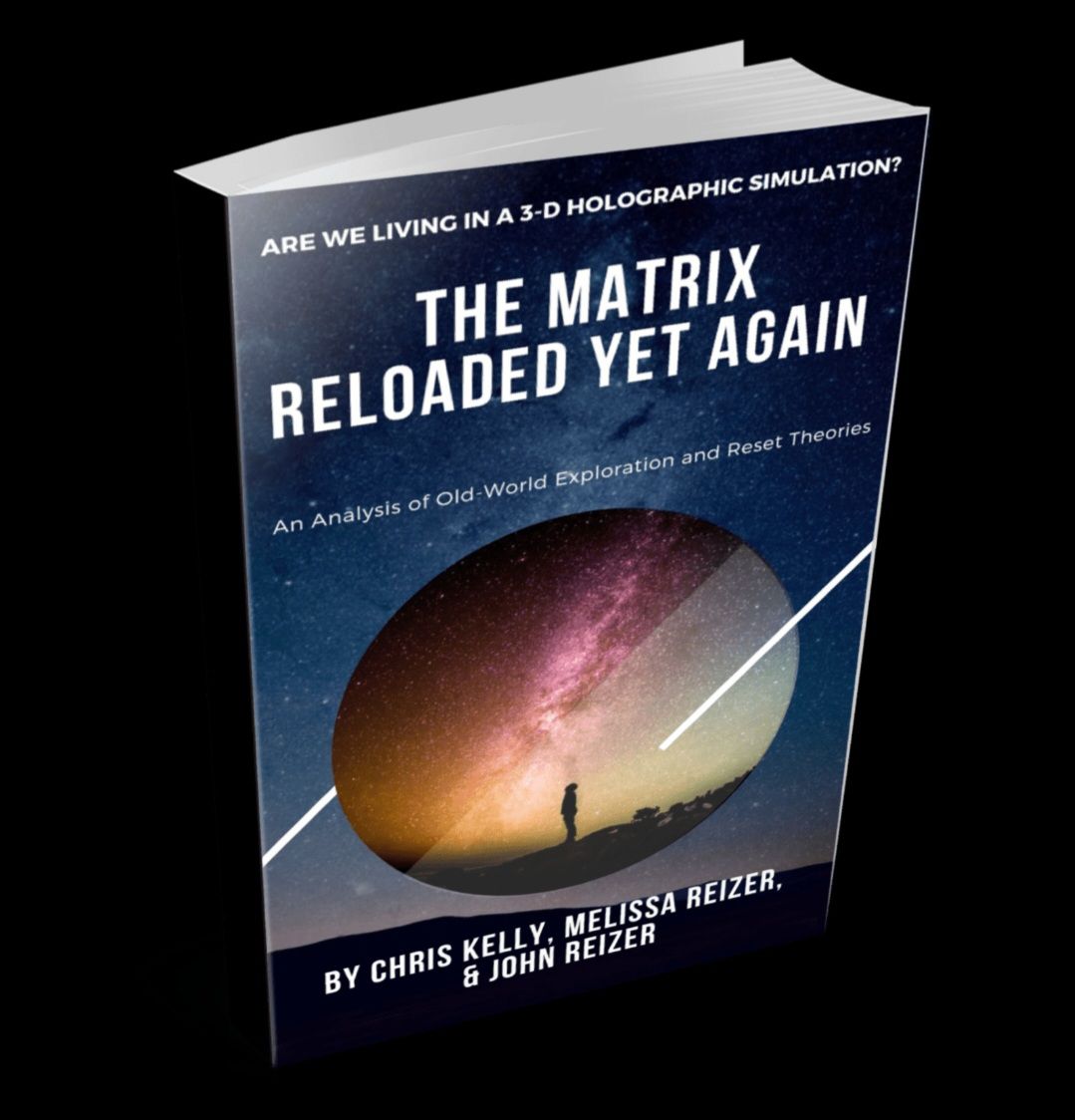
Click on the book cover to order!

Amazon 5-Star Reviews
🌟🌟🌟🌟🌟
“I discovered this book & author by watching Gareth Icke (David Icke’s son) on Ickonic. What a great find in my search for truth!”
🌟🌟🌟🌟🌟
“I recommend “The Matrix Reloaded Yet Again” to anyone looking for inspiration to question the reality we are all living.”
🌟🌟🌟🌟🌟
“This is a publication that everyone should get their hands on and then share with others.”
🌟🌟🌟🌟🌟
“An excellent read! Are you ready to dive into the dark abyss of our matrix? If so, I highly recommend this book!”
Curing Cancer Was A Mistake!

Click On A Platform Below To
Watch Target List




Watch Now In:
🇦🇺 Australia 🇧🇪 Belgium 🇧🇬 Bulgaria
🇨🇦 Canada 🇨🇿 Czech Republic 🇬🇷 Greece
🇲🇽 Mexico 🇳🇴 Norway 🇵🇭 Philippines
🇨🇭 Switzerland 🇬🇧 United Kingdom 🇺🇸 USA
 NoFakeNews