
By Dr. John Reizer
I recently sent free copies of my new novella, Holograms, to Beta readers and asked them to submit questions they’d like answered about this unique science fiction story.
I chose the best questions submitted and answered them to the best of my abilities.
Thanks so much to all of you, beta readers, who took the time to read my story and submit questions.
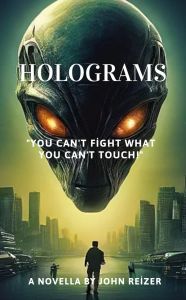
Interview Questions and Answers
Q: What inspired the idea behind this story?
JR: The inspiration for HOLOGRAMS came from a simple but intriguing question: What if the laws of physics suddenly stopped working the way we expect? Physics suggests that reality is stable and predictable, but modern theories like quantum mechanics indicate that it is far stranger than we perceive it to be. I wanted to imagine what it would look like if those underlying rules started breaking down and humanity had to confront the possibility that our universe isn’t as permanent and solid as we think it is.
Q: Your novel combines science with cosmic horror. Why did you choose that approach?
JR: Science can be both empowering and terrifying. The more we learn about the universe, the more we realize how little we actually understand. By blending real scientific concepts with cosmic-scale mystery, I wanted readers to feel that unsettling edge between discovery and dread. The aliens in the story aren’t traditional invaders; they represent forces beyond human understanding.
Q: Dr. Jennifer Ross is the central character. What makes her different from typical sci-fi protagonists?
JR: Jennifer Ross isn’t a soldier or an action hero. She’s a scientist whose greatest weapon is curiosity. While governments respond with military force, she approaches the problem intellectually. Her strength comes from her ability to question assumptions about reality itself. I wanted a character who confronts the unknown, not with violence, but with understanding.
Q: The holographic life forms in the book are very unusual. How did you come up with them?
JR: I wanted aliens who didn’t feel biological in the traditional sense. Instead of flesh-and-blood creatures, these entities behave more like projections or manifestations from another layer of reality. Their ability to pass through walls or distort time reflects the idea that our universe’s physical rules don’t bind them.
Q: Your story explores overlapping realities. What drew you to that concept?
JR: The idea of multiple layers of reality fascinates me. Some interpretations of quantum physics and cosmology suggest that our universe may be just one of many. In the book, Earth sits at the intersection of two realities that are starting to collide. That collision produces the strange anomalies people experience throughout the story.
Q: Governments in the novel initially respond with military force. Is that meant as commentary?
JR: In a way, yes. Humanity often responds to the unknown with aggression because it’s something we understand. But the novel asks what happens when the threat isn’t physical at all. If the universe itself is changing, weapons become meaningless. That forces humanity to rethink how it confronts existential threats.
Q: The story hints that Earth itself holds a secret. Can you talk about that without giving too much away?
JR: I’ll keep it vague to avoid spoilers, but the key discovery is that Earth isn’t just a planet; it plays a role in the structure of reality itself. Dr. Ross realizes that the anomalies and alien appearances aren’t random. They’re symptoms of a much deeper truth about how our universe is built.
Q: What themes do you hope readers take away from the book?
JR: One major theme is humility. Humanity often assumes it understands its place in the universe, but reality may be far more complex. The story also explores the power of knowledge and the importance of questioning what we think we know.
Q: Did you draw on real scientific theories while writing the book?
JR: Absolutely. While the story is fictional, many ideas are inspired by real concepts in quantum physics, cosmology, and theoretical models about higher dimensions. I like grounding speculative fiction in science because it makes the “impossible” feel just plausible enough to be unsettling.
Q: If readers could take away one thing after finishing your book, what would you want it to be?
JR: I want readers to look up at the sky and feel that same curiosity, Dr. Jennifer Ross feels, wondering whether reality is as stable as it seems or whether something far stranger might be unfolding just beyond our perception.
Become a Beta Reader!
If you’re interested in becoming a beta reader for John Reizer’s fictional stories, please send your email address via the NFN website’s contact page.
Beta readers receive free advance copies of selected new works in exchange for non-biased feedback or reviews.
From the author of The Target List story
Coming May 2nd, 2026

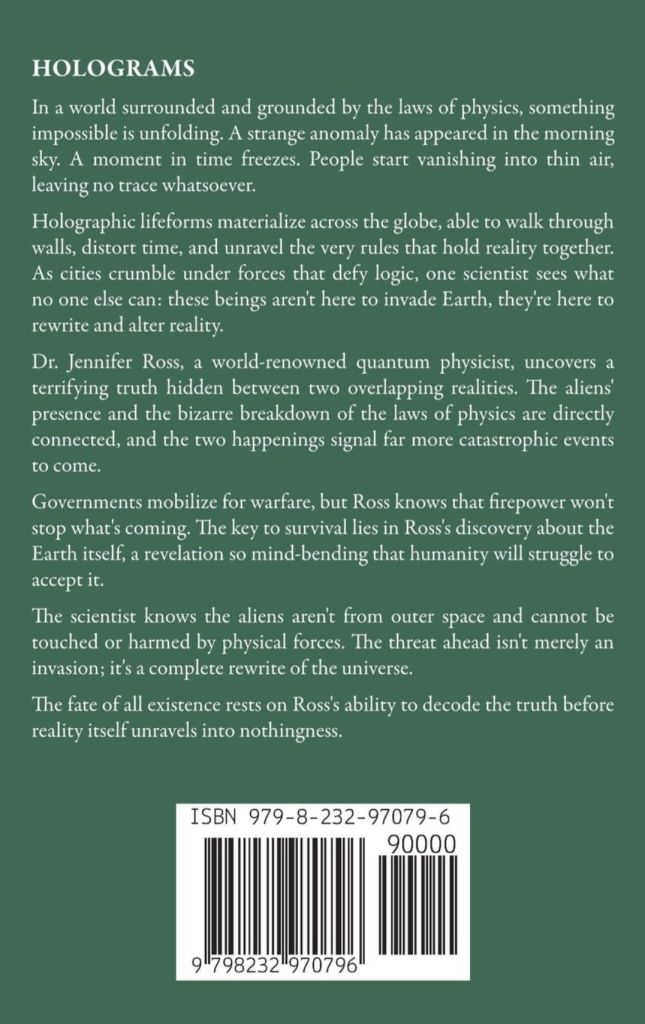
The Truth Told Through Comedic Fiction!
A Feature Film
Curing Cancer Was A Mistake!
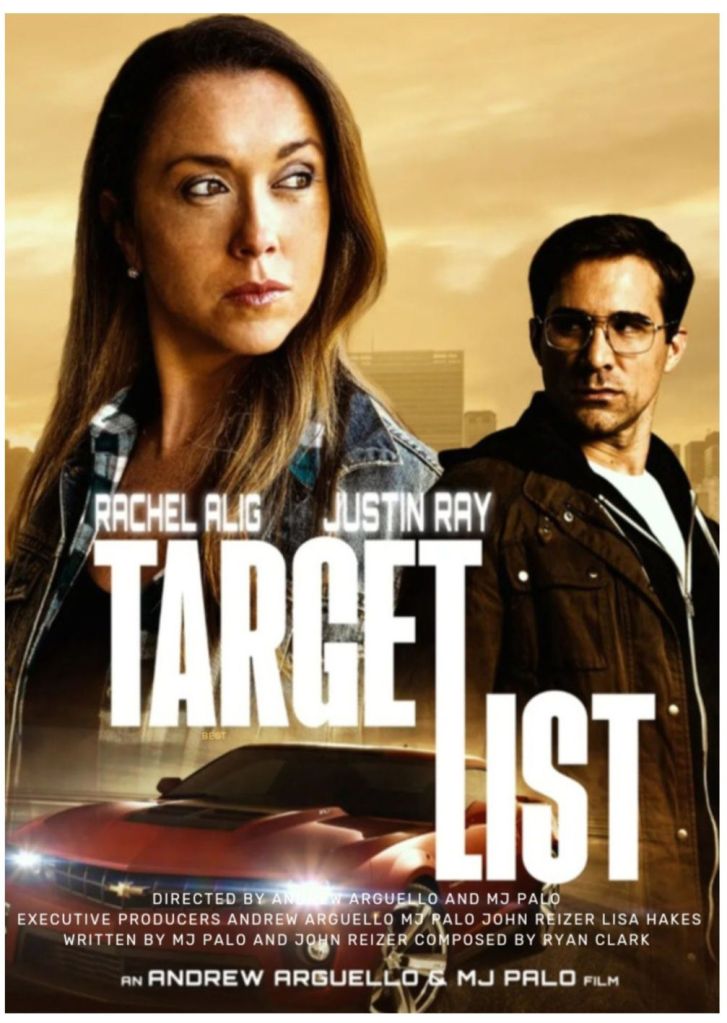
Click on the poster to watch Target List
Click on the images below to Watch Target List

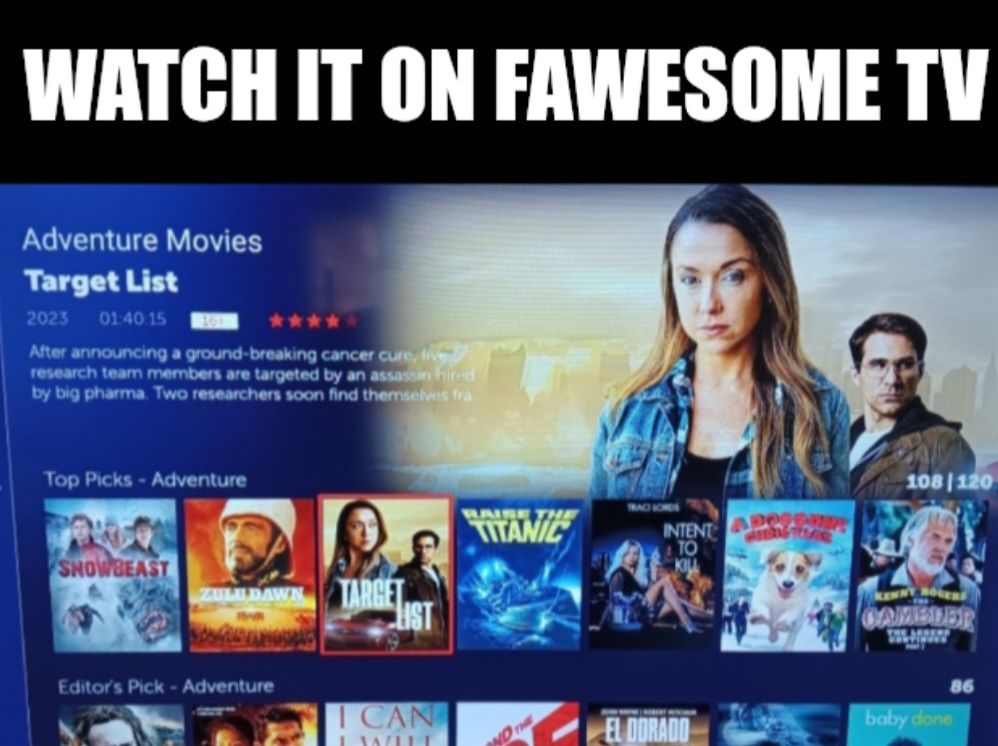
“Target List had me on the edge of my seat throughout. Not the least because of its believability!” — GARETH ICKE
– DIRECTOR OF THE DAVID ICKE WEBSITE

“… I believe in the future he could be esteemed as one of the prophets of science fiction. If you’re not familiar with John Reizer’s works, you should be.”
 NoFakeNews