
By Dr. John Reizer
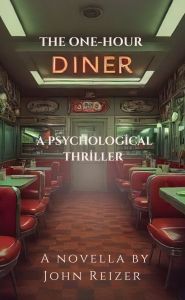
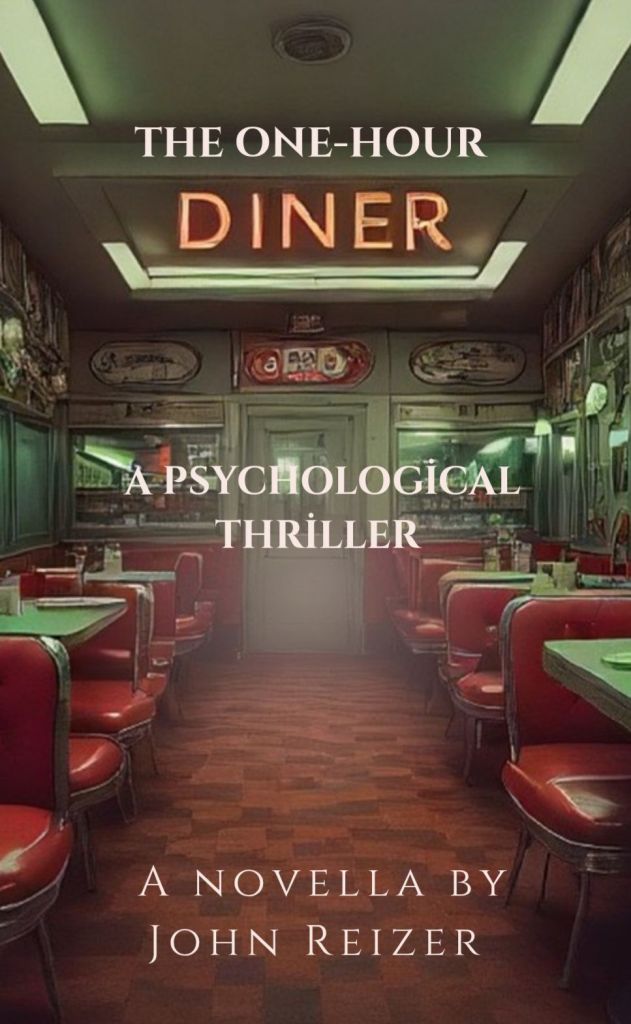
I sent free copies of my new novella, The One-Hour Diner, to Beta readers and asked them to submit questions they’d like answered about this psychological thriller.
I chose the best questions submitted and answered them to the best of my abilities.
Thanks so much to all of you, beta readers, who took the time to read my story and submit questions.
Interview Questions and Answers
Q: The One-Hour Diner story opens with a chilling premise: two strangers, summoned by a cryptic message, arrive at a diner frozen at 2:17 a.m. Where did the idea for this story begin?
JR: It actually started with the image of a clock that wouldn’t move. I was driving home late one night when I passed an abandoned roadside restaurant called The Clock Diner, and I imagined what it would feel like to walk inside and have time stop. From there, the concept grew into something more psychological rather than purely supernatural. I became fascinated by the idea that time might emotionally freeze for people after a trauma. That became the heart and soul of The One-Hour Diner.
Q: The diner itself feels like a character. Was that intentional?
JR: Absolutely. The Crossroads Diner isn’t just a physical location; it’s an interrogator. It traps the protagonists and forces them to confront what they’ve buried in their subconscious. I wanted it to feel almost sentient, much like the eerie atmosphere you might encounter in an episode of The Twilight Zone; the diner exists in that unique space between reality and something else.
Q: The clock frozen at 2:17 a.m. is such a specific detail. Why that time?
JR: A specific time makes the mystery more believable. 2:17 a.m. feels arbitrary at first, but eventually, readers understand it marks the exact moment that something irreversible occurred three years earlier. It’s the exact minute the characters’ lives changed. The repetition of that time in the story becomes almost oppressive by design.
Q: Memory or the lack thereof plays a central role in your novella. The characters slowly realize they’ve constructed comforting lies for themselves. What drew you to that theme?
JR: I’ve always been intrigued by how memory is less of a recording and more of a story we tell ourselves. When something traumatic happens, the mind edits, reframes, and sometimes erases things. In this story, the diner strips away those edits. It doesn’t allow the characters the luxury of creating or maintaining self-deception.
Q: The looping structure, every attempt to leave results in a reset, creates a claustrophobic effect. Did other time-loop narratives influence you?
JR: Yes. People might think of Groundhog Day, but in my opinion, this story is the darker cousin of that idea. The loop in this tale isn’t a second chance at self-improvement; it’s a forced uncovering of guilt. I wrote this story so that the horror is psychological before it’s supernatural.
Q: The two main characters are strangers yet connected by something terrible. Why make them unknown to each other?
JR: Because I believe guilt isolates human beings. Even when two people share responsibility for something, they often suffer alone. Making them strangers also heightens the story’s tension. They’re forced not only to confront the truth but to see themselves reflected in someone else’s buried shame.
Q: The central question lingers: Is the diner real, or is it a construct of their collective mind?
JR: I won’t answer that because I want the readers to make that determination for themselves. If it’s supernatural, then it’s a purgatory of sorts. If it’s psychological, then it’s a shared trauma response manifesting symbolically. Either way, the diner only exists because the truth demands acknowledgment. The ambiguity allows readers to project their own beliefs onto the story.
Q: Grief and guilt are heavy themes in this novel. Did you worry about balancing darkness with readability?
JR: Absolutely. The horror works best in the parts of the story when the song keeps replaying on the jukebox, the keychain slides across the tabletop, the waitress robotically stirs the same cup of coffee, and in other gadgets I used. Those things, along with the regular resetting of the two characters back into the diner booth, become unsettling over the course of the story. I believe the story balances the right amounts of darkness and other components to deliver a very entertaining and readable short novel.
Q: Without spoilers, what do you hope readers take away from The One-Hour Diner?
JR: That the truth always awaits. You can’t outrun, rewrite, or suppress it. Eventually, you have to sit across from it in a diner booth at 2:17 a.m. The story ultimately asks: What would happen if you were forced to relive the worst moment of your life repeatedly until you come to terms with and embrace the truth?
Q: Finally, how would you describe The One-Hour Diner in one sentence?
JR: I believe it’s a psychological reckoning of sorts disguised as a roadside horror story.
Become a Beta Reader!
If you’re interested in becoming a beta reader for John Reizer’s fictional stories, please send your email address via the NFN website’s contact page.
Beta readers receive free advance copies of selected new works in exchange for non-biased feedback or reviews.
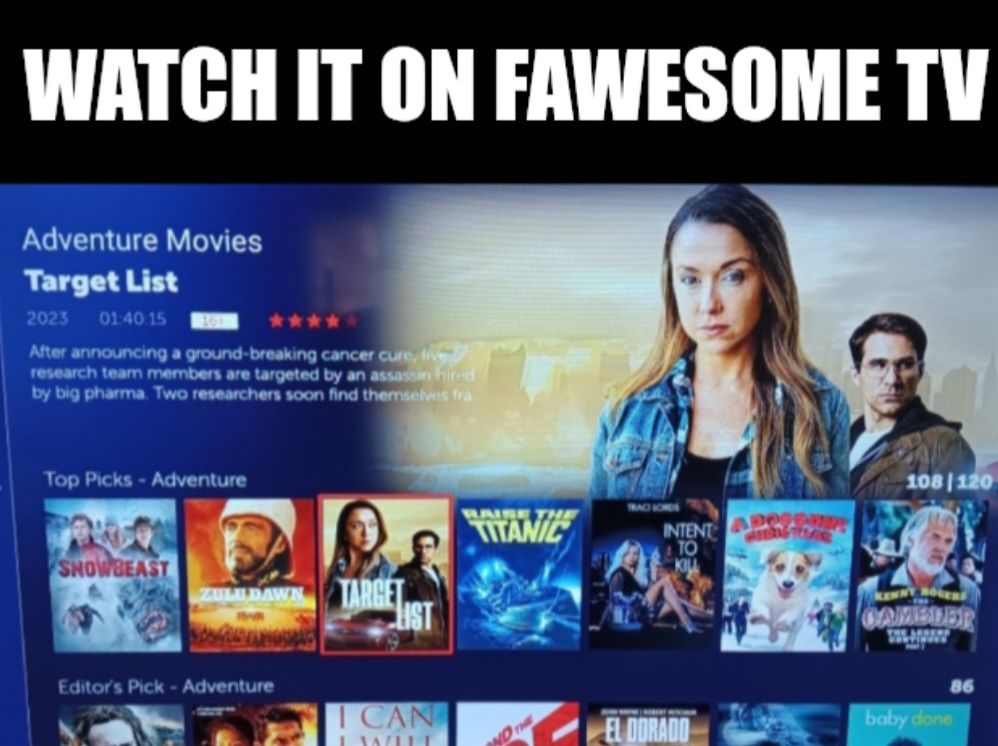
From the author of The Target List story
Coming July 4th, 2026
The Truth Told Through Comedic Fiction!
A Feature Film
Curing Cancer Was A Mistake!
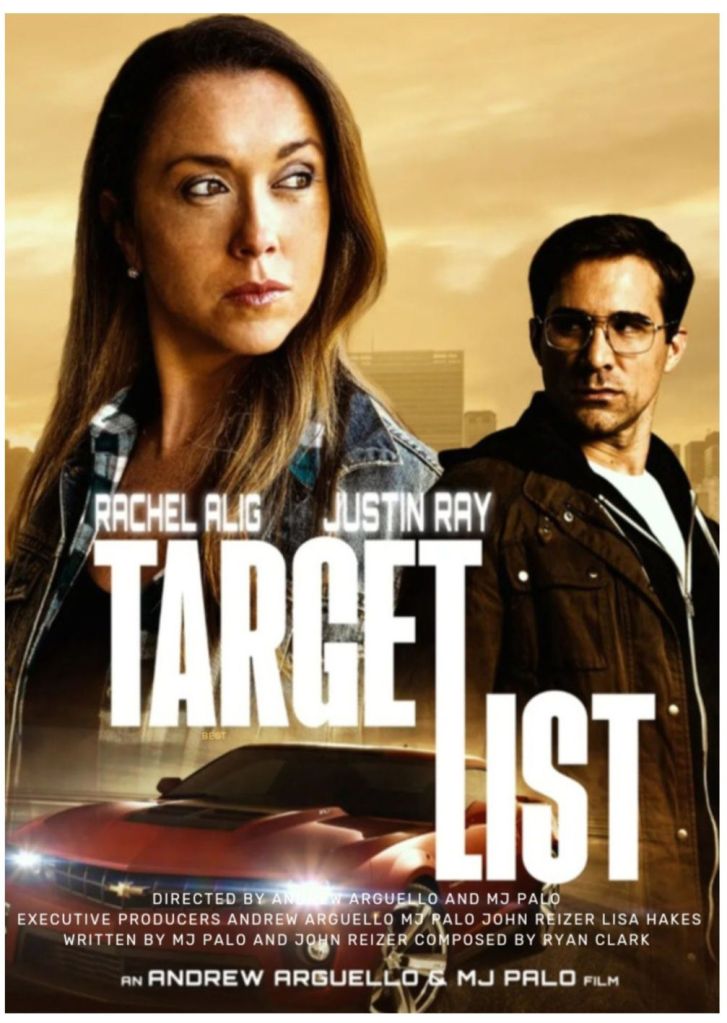
Click on the images below to Watch Target List

“Target List had me on the edge of my seat throughout. Not the least because of its believability!” — GARETH ICKE
– DIRECTOR OF THE DAVID ICKE WEBSITE

“… I believe in the future he could be esteemed as one of the prophets of science fiction. If you’re not familiar with John Reizer’s works, you should be.”

 NoFakeNews
59 thoughts on “The One-Hour Diner: The Author Interview”