
According to Officialdom…
How many people in general are likely to suffer a stroke in their lifetime?
1 out of 4 or 25%

How many people with atrial fibrillation are likely to have a stroke in their lifetimes?
1 out of 3 or 33%

How much money does Big Pharma make in the yearly management of atrial fibrillation?
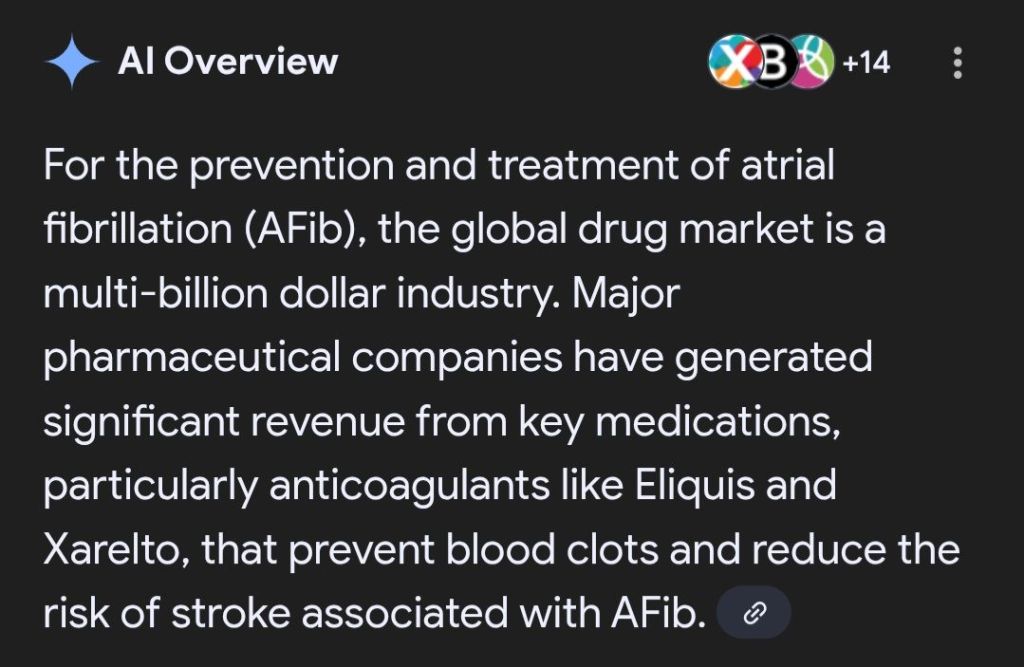
Has the number of people or patients with atrial fibrillation increased over the years?

Are commonly prescribed drugs known to cause atrial fibrillation? What about over-the-counter drugs?

AI Overview Continued…
Certain over-the-counter (OTC) and commonly prescribed drugs can increase the risk of stroke.
Over-the-counter (OTC) drugs
Nonsteroidal anti-inflammatory drugs (NSAIDs)
The FDA requires a boxed warning on all non-aspirin NSAIDs about an increased risk of heart attack and stroke. The risk applies to both people with and without pre-existing heart disease.
- Mechanism: These drugs can increase blood clotting and blood pressure.
- Common examples: Ibuprofen (Advil, Motrin) and naproxen (Aleve).
- Important considerations:
- The risk can occur within the first few weeks of daily use.
- Higher doses and longer use may carry a greater risk.
- Some NSAIDs, like ibuprofen and naproxen, can interfere with the heart-protective effects of low-dose aspirin.
Decongestants
Some decongestants, including those found in nasal sprays and oral medications, can increase blood pressure, which is a major risk factor for stroke.
- Mechanism: The active ingredients are vasoconstrictors that narrow blood vessels.
- Common examples:
- Pseudoephedrine (Sudafed): Has been linked to rare brain side effects, such as reversible cerebral vasoconstriction syndrome, which can lead to stroke.
- Phenylephrine: Works similarly to pseudoephedrine and may increase the risk of heart and brain issues.
Acetaminophen
While not commonly associated with stroke risk, one study found that acetaminophen (Tylenol) may increase stroke risk for older, frail patients with diabetes.
Prescription drugs
Combined hormonal birth control
Combined oral contraceptives (containing both estrogen and progestin) can elevate the risk of ischemic stroke, particularly in women with additional risk factors.
- Mechanism: Estrogen can increase blood clotting factors in the blood.
- Risk factors: An increased risk is more likely for women who:
- Smoke
- Are over age 35
- Have high blood pressure
- Have a history of blood clots or clotting disorders
- Experience migraines with aura
- Note: The stroke risk from combined birth control is generally lower than the risk associated with pregnancy.
Antipsychotics
Some antipsychotic medications are associated with an increased risk of stroke.
- Example: Quetiapine.
Antidepressants
Certain selective serotonin reuptake inhibitors (SSRIs) may increase the risk of bleeding, particularly if taken with NSAIDs or aspirin, which can potentially lead to a hemorrhagic stroke.
Amphetamines
Prescribed stimulants can cause sudden increases in blood pressure, which is a risk factor for stroke.
- Example: Methamphetamine, which is also a recreational drug, has been shown to increase stroke risk.
Erythropoiesis-stimulating agents (ESAs)
Used to treat anemia by stimulating red blood cell production, these agents are associated with an increased stroke risk when hemoglobin levels are targeted above a certain threshold.
Tyrosine kinase inhibitors (TKIs)
Several TKIs, which are used to treat certain cancers, have been associated with an increased risk of stroke.
- Example: Ponatinib and nilotinib.
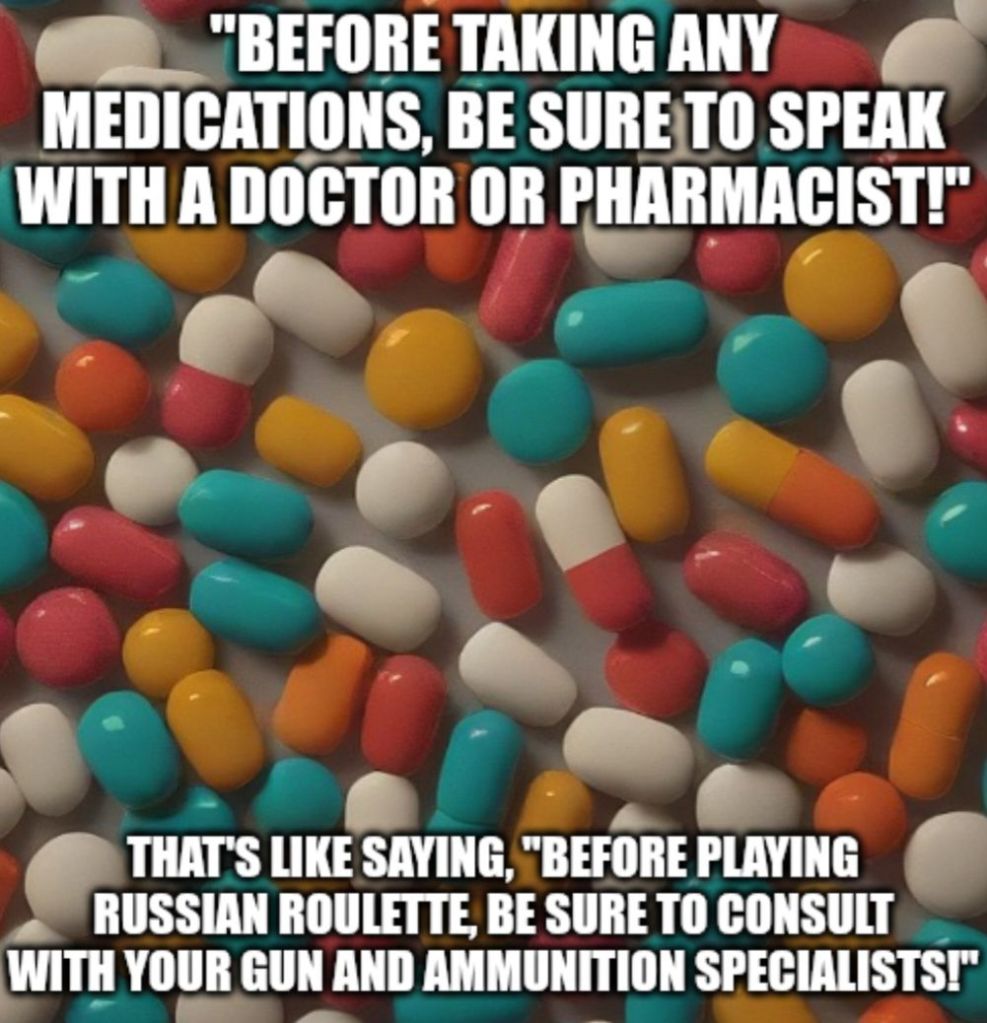
Then, there’s this disclaimer… 🤣
Some questions to ponder…
Is it possible that atrial fibrillation doesn’t pose that much more of a stroke threat to people than the general population already has without the condition?
Is it possible that the statistics being used to suggest atrial fibrillation causes a significant increase in stroke chances might be misleading?
How many of the studies that produced statistics demonstrating an increase in strokes regarding people with atrial fibrillation were conducted by independent scientists not having any ties whatsoever to pharma companies profiting from the medical management of the condition?
Could it be possible that the tremendous increase in atrial fibrillation in the human population has much more to do with prescription and non-prescription drugs being taken by so many more people than ever before, and much less to do with people living longer and other non-pharmaceutical factors?
Isn’t it possible that a pharmaceutical industry that’s regularly taking in astronomical profits from the medical management of a specific condition might have a vested interest in manipulating scientific research so that profits continue to be made?
What do you think?
Target List – A Feature Film

Click on the Image to watch the movie


 NoFakeNews
You bet, Roark! 👍🙂
Lisa
Hi Lisa,
Thanks for this share! My mom is going through something similar (doctor telling her to take a statin to lower cholesterol).
What you said about relatives listening to white lab coats more is very true usually and unfortunately!
i would replace relative with friend and white lab coat with television to add:
Friends and relatives are often more trusting of information coming from their television or white lab coats than from us.
Keep on keeping on!!
Roark
It’s hard to talk to someone about this subject, Lisa. We are trying to bang our heads up against a brick wall. 😂
John
I was speaking to my sister about medications yesterday, John. But not for atrial fibrillation. It was about cholesterol lowering medications. She is 68, and has been told to go on something to lower her cholesterol.
She tried one medication recently and suffered terrible side effects that included chronic headaches and pain. Also, she was breaking out in hives all over her body. She called the doctor and told them that she thought she was allergic. They agreed, and gave her a different prescription. But she is hesitant right now to start taking it. I told her not to, and that cholesterol wasn’t bad. And that they put all older people on these cholesterol lowering medications. She thought it was just our family! 😂
I don’t know what she’ll do. She’s planning to consult with another relative who’s been on cholesterol lowering drugs
But even people close to you tend to listen better to their white coat doctors more than they do you. 😕
Lisa
Hahaha…you can’t make this stuff up, Roark. Thanks for sharing! 👍😀
John
Hi John,
After my experience a year ago, I had a bout with A fib. I was then taken off Lisinopril. I have since learned that in some cases, Afib can be caused by.. wait for it.. Lisinopril.